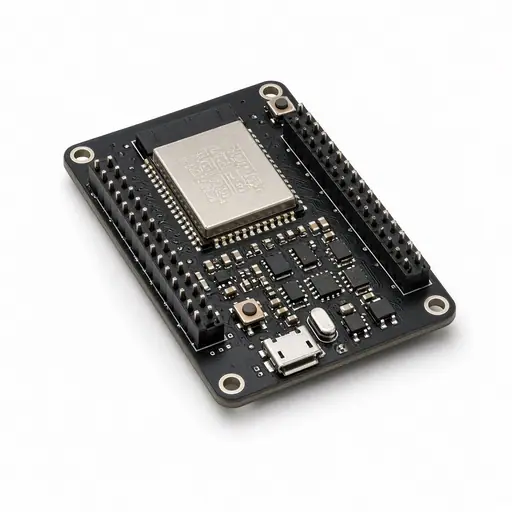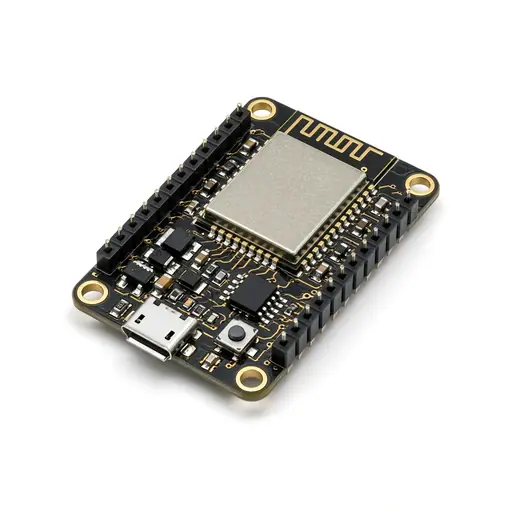
NodeMCU ESP8266
by Ai-Thinker / LoLin
SKU: PSA-CMP-NODEMCU
No reviews yetTypical India street price
₹140–₹280
Wi-Fi microcontroller used in PSA Lab wireless kits (SoftAP + /cmd).
Interface: Wi-Fi, GPIO, UART, I2C, ADC
This board is the default Wi-Fi brain for PSA Lab SoftAP kits.
Flash PSA Lab firmware, join the kit hotspot, then run Blockly over /cmd.
Open PSA LabGet notified if we start selling this part
Concept
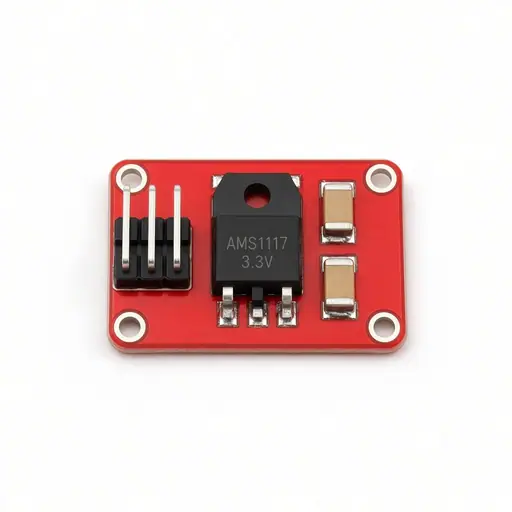
NodeMCU wraps the ESP8266 Wi-Fi SoC with USB-serial, a 3.3 V regulator, and breadboard pins. It is the brain of many PSA Lab wireless kits (SoftAP hotspot + HTTP /cmd).
A little theory
ESP8266 is a Tensilica core with 802.11 b/g/n Wi-Fi. All GPIO is 3.3 V only — 5 V on a pin can destroy the chip. GPIO0, GPIO2, and GPIO15 are boot-strapping pins: wrong levels at reset prevent boot or flash. One ADC (A0) measures roughly 0–1 V unless the board already has a divider. Wi-Fi current peaks can brown-out weak USB cables; add bulk capacitance on 3.3 V for radios + motors. In the classroom, treat NodeMCU ESP8266 as a beginner part using Wi-Fi, GPIO, UART, I2C, ADC. Typical India street price is about ₹140–₹280. Always verify voltage and pin labels on your exact module — silk screens vary across clones. Start with a datasheet or trusted learn guide, power the part correctly, share GND with the MCU, and test with a simple blink/read sketch before building the full project. Measure voltages with a multimeter when something fails, and keep actuator current off the MCU regulator.
How it works in a project
Flash with Arduino-ESP8266 core or MicroPython. Station mode joins school Wi-Fi; SoftAP creates a kit hotspot. PSA Lab firmware often exposes SET:/PING over HTTP. Map silk labels D0–D8 to GPIO numbers when wiring.
Classroom & project use
- PSA Inventor wireless kits
- IoT telemetry dashboards
- Home-automation demos
- SoftAP classroom robots
Buying in India
Precautions
- Never inject 5 V into GPIO
- Watch boot pins D3/D4/D8
- Give motors their own supply and common GND
Specifications
| MCU | ESP8266 |
| WiFi | 802.11 b/g/n |
| Logic | 3.3V |
| ADC | 1 ch (A0) |
| Category | Microcontrollers |
| Difficulty | Beginner |
| Voltage | 3.3V logic (USB 5V in) |
| Interface | Wi-Fi, GPIO, UART, I2C, ADC |
Pinout
D0=GPIO16  D1=GPIO5 SCL  D2=GPIO4 SDA  D3=GPIO0  D4=GPIO2 LED
D5=GPIO14 SCK  D6=GPIO12 MISO  D7=GPIO13 MOSI  D8=GPIO15 CS  A0=ADC