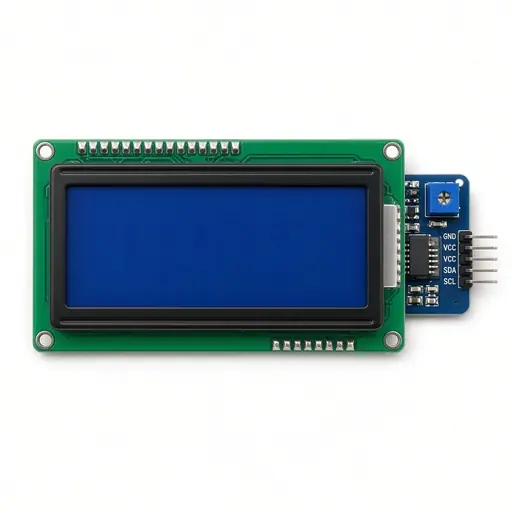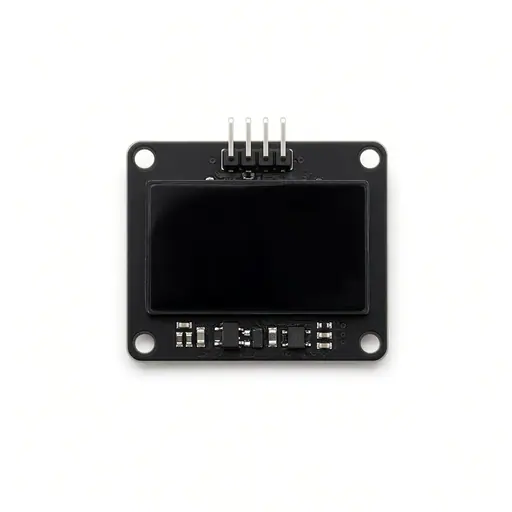
0.96" OLED 128×64 (SSD1306 I2C)
by Generic
SKU: PSA-CMP-OLED
No reviews yetTypical India street price
₹120–₹250
Crisp pixel display for graphs, faces, and tiny HUDs.
Interface: I2C
SSD1306 on the LCD I2C overlay pins (conflicts with motor overlay).
SDA → D2, SCL → D1
Blockly: display_print, oled_print
Open PSA LabGet notified if we start selling this part
Concept
A 0.96″ 128×64 OLED is a crisp pixel display where each pixel emits light. The SSD1306 controller speaks I2C so students can show sensor HUDs without dozens of wires.
A little theory
OLED pixels are current-driven organic emitters — no backlight needed, true blacks. SSD1306 holds a 1-bit framebuffer (128×64). I2C address is usually 0x3C (sometimes 0x3D). Contrast and charge-pump settings live in init commands. SPI variants exist but 4-pin I2C dominates Indian kits. In the classroom, treat 0.96" OLED 128×64 (SSD1306 I2C) as a beginner part using I2C. Typical India street price is about ₹120–₹250. Always verify voltage and pin labels on your exact module — silk screens vary across clones. Start with a datasheet or trusted learn guide, power the part correctly, share GND with the MCU, and test with a simple blink/read sketch before building the full project. Measure voltages with a multimeter when something fails, and keep actuator current off the MCU regulator.
How it works in a project
Wire VCC, GND, SCL, SDA. Use Adafruit_SSD1306 or U8g2. Call begin(0x3C), then clearDisplay / print / display. For ESP8266 use D1/D2 as SCL/SDA.
Classroom & project use
- Sensor HUD
- Mini games
- Battery % display
- Kit status / IP address
Buying in India
Precautions
- Do not over-volt (stay within 3.3–5 V module rating)
- Avoid static on the glass
- Confirm 0x3C vs 0x3D with an I2C scanner
Specifications
| Resolution | 128×64 |
| IC | SSD1306 |
| Bus | I2C 0x3C |
| Size | 0.96 inch |
| Category | Displays |
| Difficulty | Beginner |
| Voltage | 3.3–5V |
| Interface | I2C |
Pinout
GND | VCC | SCL | SDA (address 0x3C typical)